
Selling an old vehicle does not have to be complicated. If your car has stopped running, suffered accident damage, failed an inspection, or simply become too expensive to maintain, selling it for cash may be a practical alternative to paying for more repairs. The key is knowing which buyers to contact, what information to prepare, and how to compare offers before making a decision.
If you are searching for how to sell my junk car for cash, start by understanding what your vehicle is worth to different buyers. A car that seems useless to its owner may still have value because of its reusable parts, metal, or salvageable components. The amount you receive depends on the vehicle’s condition, demand for its parts, and the terms of the sale.
For Detroit vehicle owners, ABS Cash for Junk Cars Detroit is a local business to consider when exploring options for an unwanted vehicle. By preparing a few details in advance and asking the right questions, you can make the selling process more straightforward and avoid common mistakes.
How to Sell My Junk Car for Cash Without Unnecessary Hassles
The simplest way to approach a junk car sale is to gather your vehicle information, contact potential buyers, compare their offers, and confirm the payment and pickup arrangements before agreeing to sell.
Here is a practical process to follow:
- Assess your vehicle. Identify its make, model, year, mileage if known, and current condition.
- Gather the important details. Note whether the car starts, has major damage, or is missing important components.
- Contact potential buyers. Ask junk car buyers, salvage businesses, or other suitable purchasers whether they are interested in your vehicle.
- Compare the offers. Consider the amount offered alongside towing arrangements, additional charges, and payment terms.
- Confirm the paperwork. Check what ownership documents are required and how the sale will be recorded.
- Arrange collection and payment. Agree on the pickup location, timing, final price, and payment method before releasing the vehicle.
Following these steps helps you compare your options based on the complete transaction rather than focusing only on the first price you hear.
What Determines How Much Your Junk Car Is Worth?

A junk car does not have one fixed value. Two vehicles of the same make and model may receive different offers because their condition, parts, and salvage potential can vary considerably.
Understanding these factors can help you set realistic expectations when requesting a cash offer.
Vehicle condition and damage
A vehicle that still runs may appeal to buyers interested in repairing it or reselling usable components. A car with a damaged engine, transmission problems, flood damage, or severe collision damage may be valued mainly for its salvageable parts and scrap materials.
Be honest about the condition. If the engine is missing, the tires are flat, or the vehicle has been sitting outside for years, mention these details when requesting an offer.
Make, model, year, and parts demand
Some vehicles contain components that are easier to resell than others. Engines, transmissions, alternators, catalytic converters, wheels, and electronic components may influence a buyer’s assessment when they are present and reusable.
The demand for those parts depends on the vehicle and the local market. An older vehicle can still have value even if it is no longer suitable for everyday driving.
Weight and scrap metal value
If a vehicle has little resale potential, its scrap materials may be a major part of its value. The vehicle’s weight, metal composition, and the buyer’s processing costs can affect the offer.
Scrap value alone does not determine every offer. A buyer may also consider reusable parts, transportation expenses, and the work needed to dismantle or process the vehicle.
Pickup requirements
A vehicle that cannot move under its own power may need a tow truck or specialized equipment. The pickup location, accessibility, and loading requirements can influence the total transaction.
Ask whether towing is included in the quoted amount or charged separately. A slightly lower offer may be more attractive if it includes convenient pickup without unexpected deductions.
Which Type of Buyer Should You Contact?

Choosing the right buyer is just as important as describing your vehicle accurately. Different selling options suit different vehicles and circumstances.
| Selling option | When it may make sense | What to consider |
| Private buyer | The vehicle still runs or could be repaired | More communication, advertising, and negotiation |
| Used-car dealer | The vehicle has resale potential | The dealer may not want heavily damaged vehicles |
| Junk car buyer | The car is old, unwanted, or no longer economical to repair | Confirm the final offer, payment, and pickup terms |
| Scrap yard or salvage buyer | The vehicle has limited resale potential | Ask how parts, scrap materials, and transportation affect the offer |
A private sale may be worth exploring if the car remains desirable and you have time to manage inquiries and viewings. A specialized junk car buyer may be more practical if the vehicle does not run or you want to avoid arranging a private sale yourself.
For Detroit residents, ABS Cash for Junk Cars Detroit is a local option to investigate when comparing buyers for an unwanted vehicle. Contact the business to confirm its current purchasing criteria, available services, and pickup arrangements.
How to Compare Cash Offers Without Getting Caught by Hidden Costs
The first offer is not necessarily the best overall deal. Before agreeing to sell, compare what each buyer is actually offering and what you will need to do to complete the transaction.
Use these questions when speaking with potential buyers:
- Is the quoted amount based on the vehicle’s actual condition?
- Could the price change when the buyer arrives?
- Is towing included, or will I pay an additional fee?
- Are there charges for difficult access or loading?
- What payment method will be used?
- When will payment be provided?
- What paperwork must I complete?
- What happens if the buyer discovers a condition I did not mention?
For example, imagine one buyer offers $350 but deducts a towing fee at pickup, while another offers $300 with pickup included. The second offer could leave you with more money after expenses. These figures are illustrative, not actual market quotes.
Ask each buyer to explain any conditions attached to the offer. If a price is conditional on inspecting the vehicle, clarify what could change it and how the revised amount will be agreed upon.
What Information Should You Prepare Before Requesting an Offer?
You do not need to repair your junk car just to begin comparing selling options. However, having accurate information ready can make conversations with buyers more productive.
Prepare the following details:
- Vehicle identification: Make, model, year, and VIN if available.
- Current condition: Whether the car starts, runs, moves, or has major mechanical problems.
- Damage history: Information about collision damage, flooding, rust, or fire damage.
- Missing components: Whether the engine, transmission, catalytic converter, wheels, or other major parts are missing.
- Mileage: The odometer reading, if it can be checked.
- Location: Where the vehicle is parked and whether a tow truck can access it.
- Ownership status: Whether you have the title and whether a lender or another owner has an interest in the vehicle.
You should also take a few clear photographs if a buyer requests them. Pictures of the exterior, interior, dashboard, engine area, and major damage can help explain the vehicle’s condition.
Do not guess at details you do not know. Tell the buyer when information is unavailable, and ask what additional information is needed before a firm offer can be made.
Do You Need a Title to Sell a Junk Car in Michigan?
Ownership paperwork is one of the most important parts of selling a vehicle. In Michigan, the title generally documents ownership and is central to transferring a vehicle to another owner. The exact requirements can depend on the vehicle and transaction.
The Michigan Department of State provides guidance on vehicle titles and ownership requirements. Review the official instructions before completing your sale.
Before arranging collection:
- Check that the ownership information is correct.
- Determine whether any co-owner must participate in the transaction.
- Check for an outstanding lien or loan.
- Ask the buyer which documents are required for the particular vehicle.
- Complete the required transfer paperwork and keep a record of the transaction.
If a lien remains on the vehicle, you may need documentation showing that it has been released before the sale can proceed.
If you cannot locate your title, do not assume that any buyer can legally purchase the vehicle without additional documentation. Ask the Michigan Secretary of State what options apply to your circumstances and confirm the buyer’s requirements before scheduling pickup.
What should you do with your license plate?
Michigan’s guidance generally instructs sellers to remove their license plate when selling a vehicle. Do not leave it on the car simply because the vehicle is being collected by a tow truck.
Keep copies of the completed sale documents and any receipt you receive. The state’s title guidance recommends keeping a copy of the completed title and sale record for at least 18 months. Follow the applicable requirements for your specific transaction.
These steps help establish that you sold the vehicle and give you documentation to refer to if questions arise later.
Should You Repair a Junk Car Before Selling It?
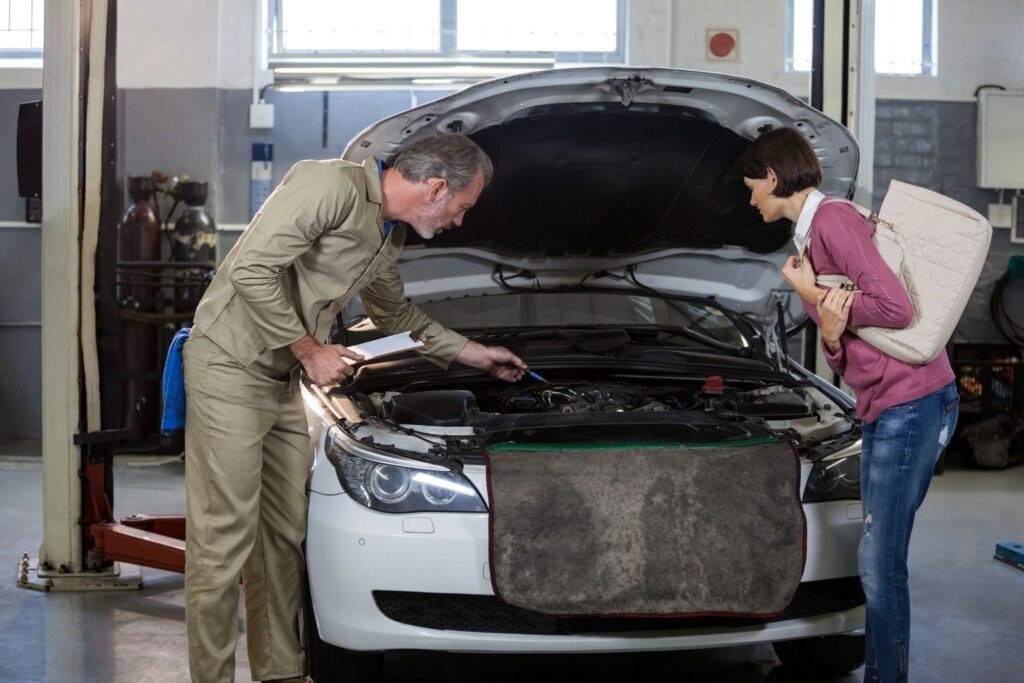
Not always. Before spending money on repairs, compare the likely cost with the potential increase in the vehicle’s selling price.
Suppose your car needs a new transmission. If the repair costs more than the additional amount a buyer might pay for a running vehicle, repairing it solely to sell it may not be worthwhile.
Consider three questions:
- How much will the repair actually cost?
- How much more could you reasonably receive after the repair?
- How long will the repair take, and will you incur other expenses while waiting?
For a vehicle with extensive engine damage, severe rust, or major accident damage, selling it in its current condition may be the more practical option. For a car with a minor issue and strong resale demand, a repair might make financial sense.
Request offers for the vehicle as it stands before authorizing expensive work. That gives you a starting point for deciding whether repairs are worthwhile.
Preparing Your Car for Pickup
Once you have chosen a buyer and agreed on the terms, prepare the vehicle and the pickup location.
Start by removing personal belongings from the glove compartment, trunk, door pockets, and under the seats. Check for documents, tools, garage remotes, and other items that may be easy to overlook.
Next, remove your personal information from any connected vehicle systems, navigation devices, or paired phones if the vehicle’s electronics still work.
Before the tow truck arrives, confirm:
- The pickup date and expected arrival window
- The exact location of the vehicle
- Whether the car can roll or steer
- Whether access is blocked by another vehicle or an obstacle
- Whether keys are available
- Which ownership documents must be handed over
- The agreed price and payment method
Tell the buyer if the vehicle is in a garage, a tight driveway, or another location that could make loading difficult. Accurate details help the buyer plan the appropriate equipment.
Do not sign incomplete documents or hand over ownership paperwork without understanding what you are agreeing to. Confirm payment according to the terms you accepted and retain your transaction records.
Common Mistakes to Avoid When Selling a Junk Car
A little preparation can prevent misunderstandings and help you complete the sale with greater confidence.
Accepting the first offer without comparison. Contact more than one suitable buyer if time allows. Compare the amount you will receive after any fees, not just the advertised price.
Leaving out important damage. Disclose known mechanical problems and missing parts. If the buyer discovers an undisclosed issue during inspection, the offer may change.
Ignoring the paperwork. Confirm ownership and title requirements before scheduling pickup. A vehicle’s condition does not remove the need to follow applicable transfer rules.
Failing to confirm payment. Agree on the payment method and timing in advance. Verify that the payment has been received as agreed before completing the handover.
Leaving personal belongings behind. Check the entire vehicle before it is towed away. Once the car has been collected, recovering forgotten items may be difficult.
Assuming every buyer offers the same services. Pickup availability, accepted vehicle conditions, fees, and payment arrangements can vary. Confirm these details directly rather than relying on assumptions.
Is Selling a Junk Car for Cash a Good Option in Detroit?
For some Detroit vehicle owners, selling a junk car is a practical way to clear space, avoid further repair expenses, and receive money for a vehicle they no longer need.
The right approach depends on your priorities. If maximizing the potential sale price is your main goal, you may want to compare private buyers with specialized junk car buyers. If the vehicle is badly damaged or cannot run, a salvage-focused buyer may be a more suitable starting point.
Local conditions also matter. A vehicle parked on a busy street, in a narrow driveway, or inside a garage may require different pickup arrangements. Be specific about the location and accessibility when requesting an offer.
ABS Cash for Junk Cars Detroit is a business you can contact to ask about selling an unwanted vehicle in the Detroit area. Before committing, verify which vehicles it currently accepts, how it determines offers, and whether pickup is available for your location.
The goal is not simply to find someone willing to take the car. It is to choose a buyer whose offer, paperwork process, and collection arrangements meet your needs.
Frequently Asked Questions
1. Can I sell my junk car if it does not start?
Yes, a non-running vehicle may still interest junk car buyers or salvage businesses. Its value depends on its condition, reusable components, and scrap potential. Explain the mechanical problem when requesting an offer.
2. How can I get the most money for my junk car?
Compare offers from multiple suitable buyers, describe the vehicle accurately, and ask about towing fees or other deductions. Consider the final amount you will receive rather than the initial quoted price alone.
3. Can I sell a junk car with accident damage?
Yes, some buyers purchase accident-damaged vehicles. The extent of the damage, the condition of the remaining components, and the vehicle’s salvage potential can affect the offer.
4. What if I have lost my car title in Michigan?
Contact the Michigan Secretary of State to determine whether you qualify for a duplicate title or another permitted ownership-document process. Confirm the applicable requirements before arranging the sale.
5. Do junk car buyers provide towing?
Some buyers offer vehicle pickup, while others may charge a separate transportation fee or have specific collection requirements. Confirm availability, charges, and pickup arrangements before accepting an offer.
6. How long does it take to sell a junk car for cash?
The timing varies according to the buyer’s availability, the condition and location of the vehicle, and the readiness of the required paperwork. Ask for an estimated pickup time and confirm when payment will be made.
7. Should I remove parts from my junk car before selling it?
Not without checking how doing so will affect the offer. Some components may have resale value, but removing major parts can reduce the amount a buyer is willing to pay for the remaining vehicle. Compare the expected benefit with the effort and cost.
8. What should I check before handing over my junk car?
Confirm the final agreed price, payment arrangements, required ownership documents, and pickup terms. Remove your license plate and personal belongings, complete the applicable paperwork, and retain a record of the sale.
Conclusion
Learning how to sell your junk car for cash starts with understanding your vehicle’s condition, comparing suitable buyers, and preparing the information and paperwork needed for a smooth transaction.
You do not necessarily need to repair an old or damaged car before selling it. Its reusable components and scrap materials may still have value, although the amount depends on the vehicle and the buyer’s assessment. Take time to compare the net offers, clarify pickup fees, and confirm payment before handing over ownership.
If you are in Detroit, consider contacting ABS Cash for Junk Cars Detroit to ask about its current junk car purchasing and removal services. With a clear description of your vehicle and a few sensible checks, you can make a better-informed decision about turning an unwanted car into cash.